
My First CIOF: Reflections from an Irish Fundraiser Finding Her Feet in the Room
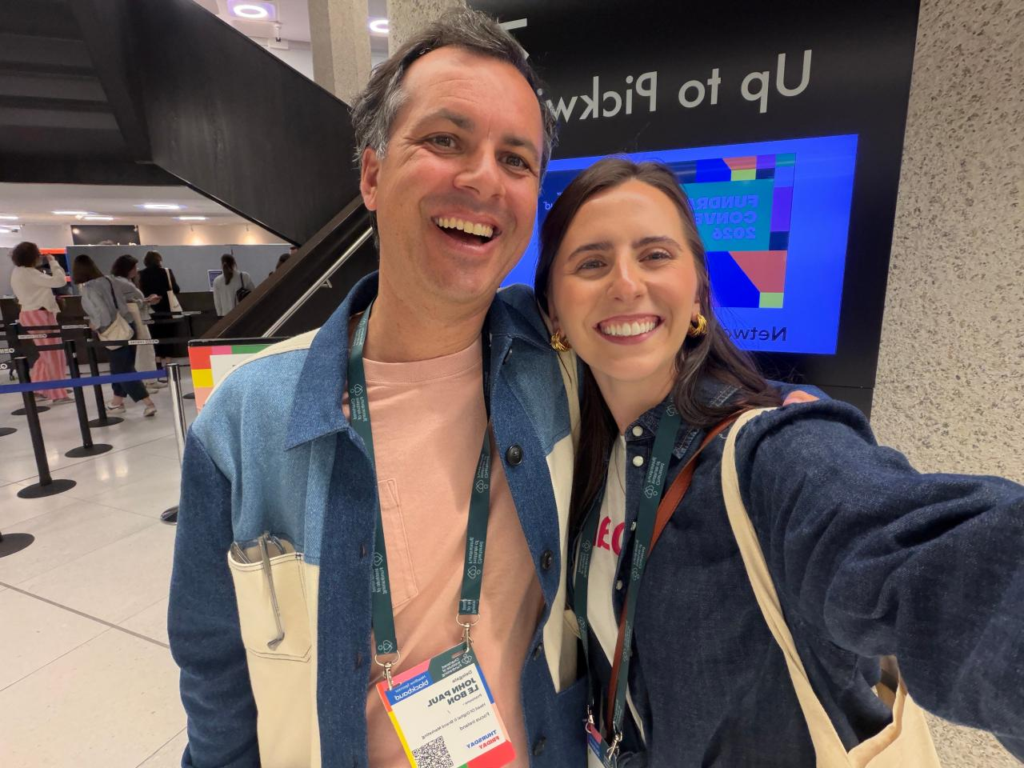
Last week I attended CIOF for the first time as an Irish fundraiser, and what a blast it was.
There’s something slightly surreal about stepping into a space where everyone around you is speaking the same language, not just fundraising terminology, but the shared understanding of the pressures, the wins, the constant balancing act between long-term strategy and immediate income needs.
Coming in as someone who works at GivePanel, there’s always a quiet tension in the back of your mind: don’t sell, don’t pitch, don’t turn every conversation into a product demo. But what made CIOF genuinely refreshing was that the conversations never needed to be forced. Once you start talking to fundraisers about their work, the sector, and their supporters, the insights flow naturally.
What stood out most wasn’t just the sessions, but the hallway conversations – hearing about what’s working, what’s stuck, and what people are trying to fix next.
Below are a few themes that kept coming up for me.
1. DIY / Community Fundraising: The “Invisible” Experience Gap
One of the most interesting recurring topics was DIY and community fundraising.
Almost every fundraiser I spoke to acknowledged it was an area they cared about deeply – and in many cases, felt slightly behind on.
With my background in marketing and consumer behaviour, I found myself naturally asking a simple question in conversations:
“If you decided right now to run a bake sale for your charity, what would be your first step?”
The answers were almost always variations of:
“Go to JustGiving,” or “Fill in a form on our website.”
And when we unpacked that second option, something became really clear: the experience between intent and action is often broken.
Many charity websites still treat DIY fundraising as an enquiry rather than an immediate journey. A supporter expresses interest, fills in a form… and then waits. Sometimes for a page, sometimes for instructions, sometimes for nothing at all.
In a world where friction is the biggest drop-off point, that gap matters.
What struck me most is that this is solvable. Fundraisers actually have a huge amount of control here. The experience doesn’t need to be heavy or complex but it does need to be immediate and intuitive.
A supporter should be able to go from:
“I want to fundraise for you” → “Here’s your page” in a single flow.
At GivePanel, this is something we think about a lot, particularly around making DIY fundraising feel less like a process and more like an instant action. Our one-click fundraising approach, and tools that allow charities to embed simple DIY forms directly into their website, are built around removing that exact friction point.
Not because tech is the answer to everything, but because supporter intent is fragile, and we have to meet it in the moment it appears.
2. Gen Z: Building Now for a Future We Still Need Today
The conversation around Gen Z was everywhere.
And as someone who is both a fundraiser and part of the Z generation, it was interesting to hear how often the same tension came up: charities know they need to build trust and loyalty with Gen Z now, but they also have immediate income targets to hit today.
So the question becomes: how do you do both?
There isn’t an easy answer, but one thing I kept coming back to is that we often think about Gen Z as a channel problem rather than an engagement ecosystem.
A lot of effort goes into acquiring younger audiences through mass participation events, digital campaigns, or social activations. But what happens after that first interaction is where things can fall away.
Are we actually building journeys for these supporters beyond the initial ask?
One point that came up in a conversation during the conference really stuck with me: charity teams often operate in silos, acquisition here, events there, legacy elsewhere, when in reality the supporter doesn’t experience any of it in isolation.
They experience one brand.
So if someone runs a marathon for you, what’s next? Not necessarily another donation ask. It could be volunteering. It could be advocacy. It could be inviting them into an in-person event or joining a long-term community.
Cross-selling doesn’t have to mean “more fundraising”, it can mean deeper connection.
And for Gen Z in particular, that depth matters just as much as the initial entry point.
3. Events Fundraising: Making Complexity Feel Simple
Events fundraising came up again and again both in formal sessions and informal chats and it was fascinating to hear the same challenges echoed across different organisations.
There’s a real sense that events are one of the most powerful tools in fundraising, but also one of the most operationally fragmented.
Different teams, different systems, different supporter journeys, all coming together to deliver a single moment of participation.
And yet, from the supporter’s perspective, it’s much simpler: “I want to sign up and take part.”
That gap between internal complexity and external simplicity is where friction creeps in.
Again, it comes back to something I kept hearing in different forms throughout CIOF: supporters will always choose the easiest path, not the one we’ve designed internally.
So when someone decides to join an event, the journey needs to feel seamless:
registration, fundraising page creation, sharing tools – all connected, all immediate, all intuitive.
This is an area where better integration and simpler supporter journeys can make a real difference.
Recently, at GivePanel, we’ve invested a lot of our time and our work in event fundraising in collaboration with JustGiving – helping charities reduce the number of steps between “I’m in” and “I’m fundraising”, so supporters can move forward without friction or delay.
Because the moment someone says yes is the most important moment to act on.
Final Thoughts
CIOF for me wasn’t about big revelations or dramatic shifts in thinking. It was about something quieter, validation, reflection, and a clearer sense of where the sector is collectively heading.
Most charities are thinking about the same things: how to better serve supporters, how to reduce friction, how to build long-term engagement without compromising short-term needs.
And perhaps most importantly, how to do all of that while keeping the human connection at the centre of it.
As an Irish fundraiser attending CIOF for the first time, I left with a lot of energy, a lot of ideas, and a real appreciation for just how collaborative this sector can be when you get everyone in the same room.
And I’m already looking forward to the next in-person meeting with all the wonderful fundraisers across the world.